
An Analysis of the ACBuy Spreadsheet Smart Shopping System
The ACBuy Spreadsheet helps discover deals. The ACBuy Spreadsheet offers product collections. The ACBuy Spreadsheet enables users to get discounts.
6/17/20263 min read
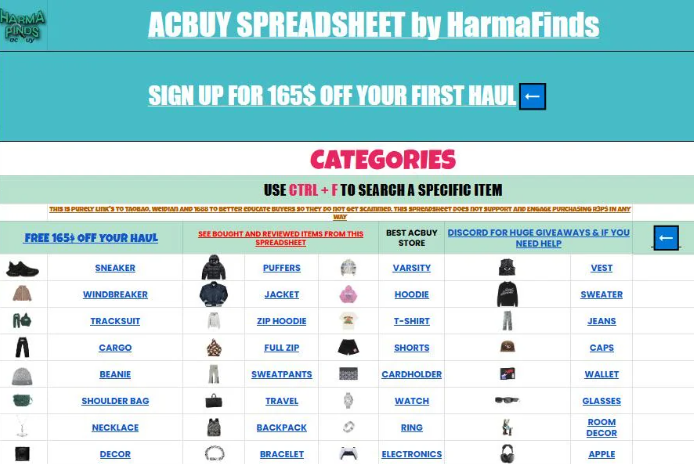
ACBuy Spreadsheet Product Recommendation System Explained: A Complete SEO Guide
In the modern global e-commerce landscape, users are no longer satisfied with random browsing or manual product searching. With thousands of listings and rapidly changing prices, what shoppers and sellers need most is a structured recommendation system that can highlight the right products quickly and accurately.
The ACBuy Spreadsheet Product Recommendation System is designed to solve this problem by transforming raw product data into a guided, intelligent recommendation framework. It helps users identify high-value products, reduce decision time, and improve purchasing accuracy.
This article provides a deep SEO-optimized breakdown of how the system works, why it is effective, and how users can fully utilize it.
What Is the ACBuy Spreadsheet Recommendation System?
The ACBuy Spreadsheet recommendation system is a structured e-commerce intelligence model that organizes products based on data signals rather than random ranking.
It typically includes:
Multi-supplier product listings
Price comparison layers
Category-based sorting
Product performance signals
Supplier consistency data
Demand and trend indicators
Instead of showing everything equally, it helps users focus on high-potential products first.
Core Principle: Data-Driven Product Recommendations
Unlike traditional recommendation algorithms that rely on popularity or ads, ACBuy Spreadsheet uses structured data such as:
Price competitiveness
Supplier frequency
Listing duplication patterns
Category performance
Market variation signals
This ensures recommendations are based on real market structure, not marketing bias.
How the Recommendation System Works
The system operates in three layers:
1. Data Collection Layer
Products are gathered from multiple suppliers and marketplaces.
2. Structuring Layer
Data is organized into a spreadsheet format with:
Product names
Prices
Supplier sources
Variants
Categories
3. Recommendation Layer
The system highlights:
Best-value products
Underpriced listings
High-demand items
Stable supply products
Key Feature 1: Smart Product Ranking
Products are not listed randomly. They are ranked based on:
Price advantage vs market average
Supplier reliability
Listing frequency
Demand signals
This helps users quickly identify top-value items without manual searching.
Key Feature 2: Multi-Supplier Recommendation Logic
Each product may have multiple suppliers.
The system compares:
Lowest available price
Average market price
Supplier consistency
This allows users to identify:
Best supplier choice
Hidden low-price options
Stable sourcing channels
Key Feature 3: Category-Based Recommendation Filtering
Products are grouped into categories such as:
Fashion
Electronics
Accessories
Lifestyle products
Within each category, the system highlights:
High-performing items
Low-competition opportunities
Emerging trends
Key Feature 4: Hidden Value Detection
One of the most powerful functions is detecting hidden value products:
These include:
Underpriced listings
Duplicate products with price differences
Low-visibility high-quality items
Early-stage trending products
These are often missed in traditional shopping platforms.
Key Feature 5: Demand Signal Analysis
The system evaluates demand using:
Listing repetition frequency
Supplier count per product
Category clustering
Higher signals indicate stronger market interest.
Key Feature 6: Price Efficiency Scoring
Products are evaluated based on price efficiency:
Low price + high stability = strong recommendation
High price + low competition = niche opportunity
Medium price + high demand = scalable option
This scoring helps refine recommendations further.
Key Feature 7: Supplier Reliability Integration
A good recommendation is not only about price.
The system also considers:
Supplier consistency
Product availability
Historical listing behavior
This reduces risk and improves long-term decision quality.
Advanced Insight: Why the System Outperforms Manual Browsing
Traditional browsing methods fail because:
Data is scattered across platforms
Prices change frequently
No unified comparison structure exists
ACBuy Spreadsheet solves this by:
Centralizing all product data
Standardizing comparison logic
Highlighting actionable insights
Reducing decision complexity
Common Mistakes When Using Recommendation Systems
Even with advanced tools, users often make mistakes:
❌ Trusting only the top-ranked item
❌ Ignoring supplier differences
❌ Overlooking shipping and total cost
❌ Focusing only on trending products
❌ Not comparing alternatives
Avoiding these improves decision accuracy significantly.
Who Should Use This System?
The ACBuy Spreadsheet recommendation system is ideal for:
E-commerce sellers
Dropshipping entrepreneurs
Online shoppers
Product researchers
Global sourcing agents
Anyone seeking faster and smarter product decisions can benefit.
Final Thoughts
The ACBuy Spreadsheet product recommendation system represents a shift from traditional browsing to structured decision intelligence. Instead of relying on popularity or guesswork, users gain access to a data-driven framework that highlights the most valuable opportunities first.
By combining supplier comparison, category analysis, demand signals, and price efficiency scoring, the system helps users consistently discover high-quality, high-value products with less effort and higher accuracy.
In today’s competitive digital marketplace, smart recommendations are essential—and ACBuy Spreadsheet provides exactly that: a structured, intelligent, and scalable product discovery engine for global e-commerce success.
acbuy
Connecting users with factories for seamless shopping.
Secure
Quality
contact@cnfansfindsheet.com
13859788884
© 2025. All rights reserved.